A Conversation with Gerhard Flekatch on Resonance, Imagination, and Art as a Space for Change
Austrian artist Gerhard Flekatsch is one of those artists who transcend the boundaries of individual media and combine drawing, photography, video, installation, and painting in his work. On the occasion of the exhibition *Resonance*, organized by the Litomyšl City Gallery as part of the *Smetana’s Artistic Litomyšl 2026* project, we spoke with him about freedom, imagination, the changes in the contemporary world, and why, in his view, nothing in nature exists in isolation.
MZ: When we first met last year during the festival in Litomyšl, you gave me your catalog. A slim red box tied with an orange silicone “snake”—one of those toys kids play with. I have to admit that your catalog made an impression on me. Even then, I realized that in your work you don’t stick to a single artistic form. What does this diversity mean to you as an artist?
GF: The way I see it, nothing in our world is black and white, as our binary (Aristotelian) logic would have us believe. Our lives are much more complex. There is no absolute reality. Everything is far more diverse than we often admit. As we grow up, creative work is perhaps one of the last opportunities we have to experiment with what we already know, without pursuing any specific goal. That is how something new comes into being. That is how we, as a society, broaden our horizons.
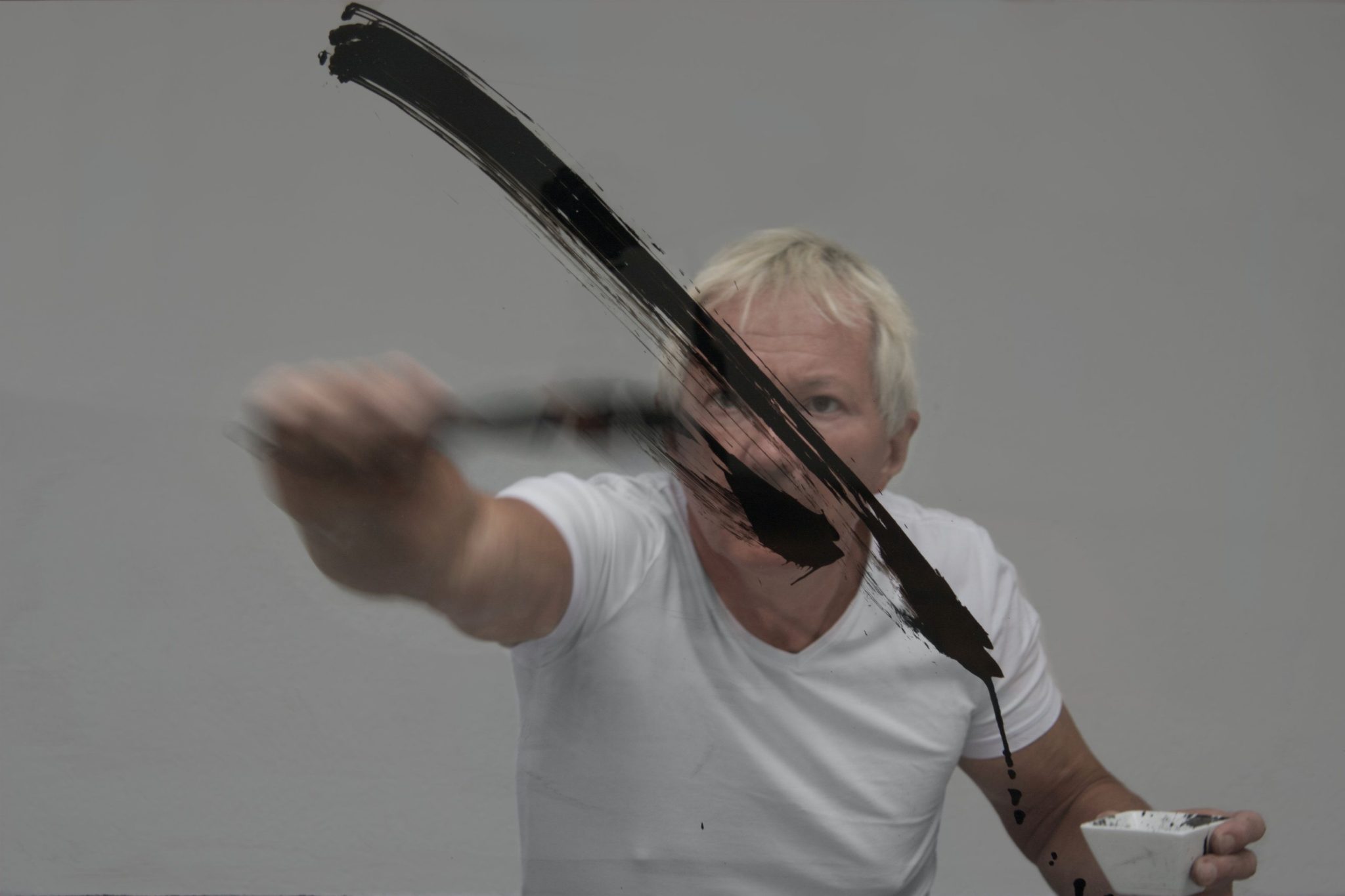
MZ: That sounds like an exceptionally free way of creating. It’s probably most strongly represented in your extensive work *Out of the Instant*.
GF: Yes, this approach underlies my daily ink drawings. Perfect freedom can only be imagined in theory. If I have a body, I must fulfill its basic needs. As soon as I start consciously thinking about something, I set rules and create boundaries. The moment I have an intention, I assess what that intention serves. All these factors mean one thing—a limitation of possibilities. And we should be aware of that. But if we manage to free our consciousness from all of this, even for a moment, we will experience a moment of freedom. And that is precisely when something new can emerge.

MZ: In your biography, you mention that you were first introduced to art in the studio of your grandfather—the painter and professor Richard Mahler. How significant was that moment for your artistic development?
GF: For me, it was above all a powerful sensory experience—unknown scents, working with materials, and finally, the materialization of an idea on the canvas. A painting, a sculpture, or a musical composition conveys a specific visual, tactile, or auditory impression. This cannot be achieved through rational thought or technique alone. It requires a complex state of consciousness in which reception and action, spontaneity and concentration, occur simultaneously. Of course, I had different interests than my grandfather, but thanks to him, I came to appreciate the magic of creation and transformation and learned to apply it to my own themes.
MZ: And what themes are currently predominant in your work?
GF: I have always been someone with an optimistic view of the world and a firm belief in the importance of human dignity, the right to self-determination, tolerance and pluralism, science, art, solidarity, and responsibility. However, my optimism is now being shaken. I see trust between people disappearing, and I sense an ever-increasing presence of fear. And fear always threatens our ability to live together. Growing aggression and selfishness, the impoverishment of language (and thus of the intellect), and ecological and economic imbalances—all of this makes us more susceptible to fake news and divisive strategies. Hand in hand with this comes the spread of autocratic tendencies and the weakening of support for social education, authentic journalism, science, and the arts. Yet art is indispensable for us to navigate the coming paradigm shift in a positive and socially acceptable way. From the perspective of evolutionary biology, art plays a key role in the development of our brains. My current focus is therefore on creating space for imagination, play, and thought—a space that allows us to explore how our perception works, how we construct our personal reality, and how a shift in perspective can move us forward.
MZ: You often talk about freedom, imagination, or a change of perspective. What does art actually mean to you personally?
GF: For me, art is above all a way to remain open to the world. It helps me notice things I would otherwise overlook and question what I take for granted. For me, it’s not an escape from reality, but rather a means of engaging with it more deeply. When I create, I’m interested in the process of discovery—that moment when I don’t yet know where the work will take me. It is precisely in this openness and uncertainty that new connections and new possibilities for understanding often emerge.
MZ: During our initial discussions about the exhibition in Litomyšl, we agreed that we would design it with the festival’s theme, “natura,” in mind. From the very beginning, however, you’ve interpreted it primarily in the sense of “naturalness” or “given-ness.” Could you explain your perspective on the exhibition in more detail to the readers of our blog?
GF: By definition, the term “natura” is derived from the word nasci (to be born). In modern language, therefore, it refers to something that was not created by humans. At the same time, however, it also refers to the “inner essence.” In my search for the essential, I realized that nothing in nature exists in isolation, but is shaped through its relationships with its surroundings. And resonance, in my view, is the concept that best captures this interconnectedness. It is a principle that manifests itself in various ways throughout the world around us. We can observe it as a physical phenomenon in acoustics, in swarm intelligence, in social relationships, and in many other contexts. Resonance is used in various contexts, and it is precisely within this broad scope that my exhibition should also be viewed.
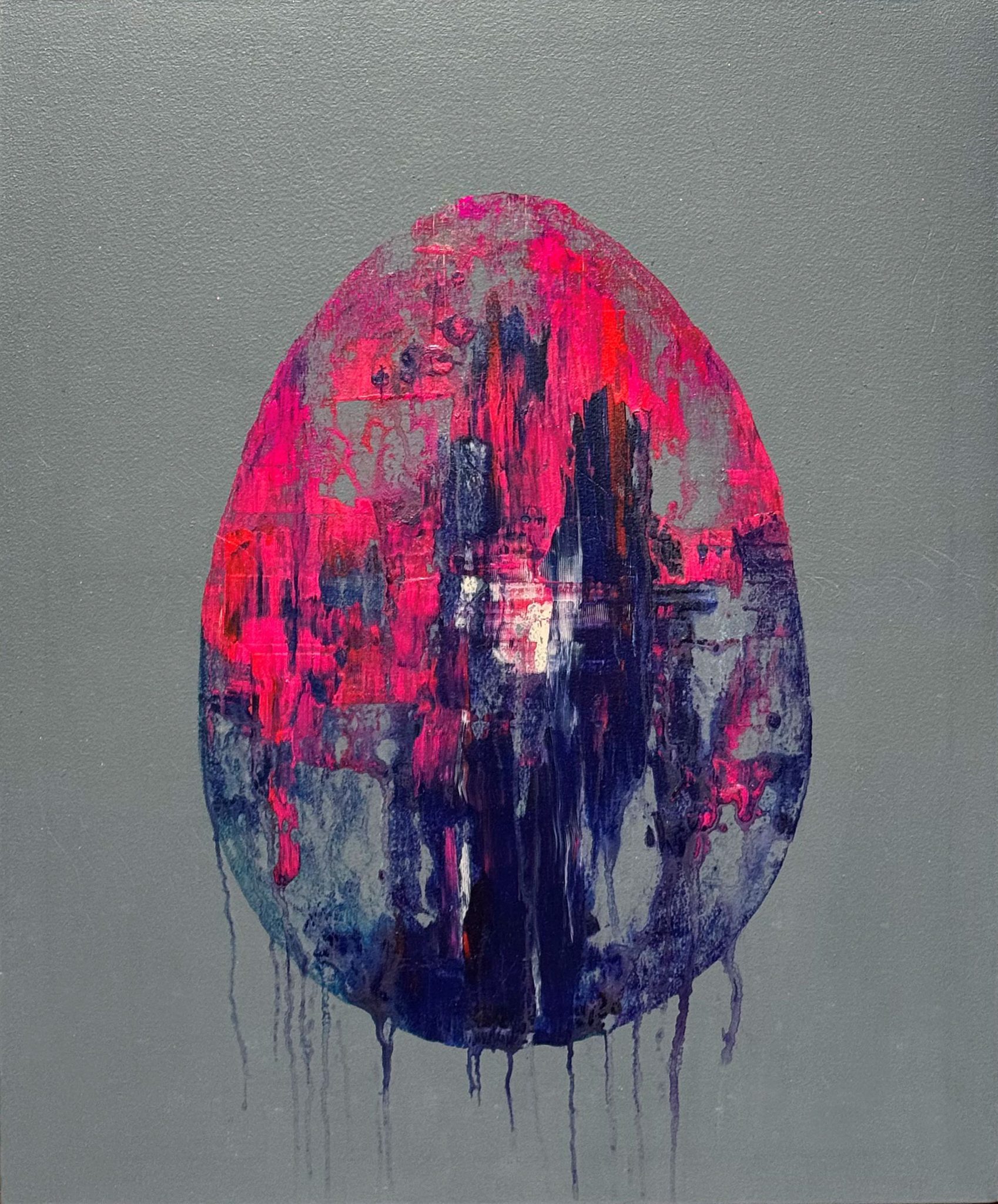
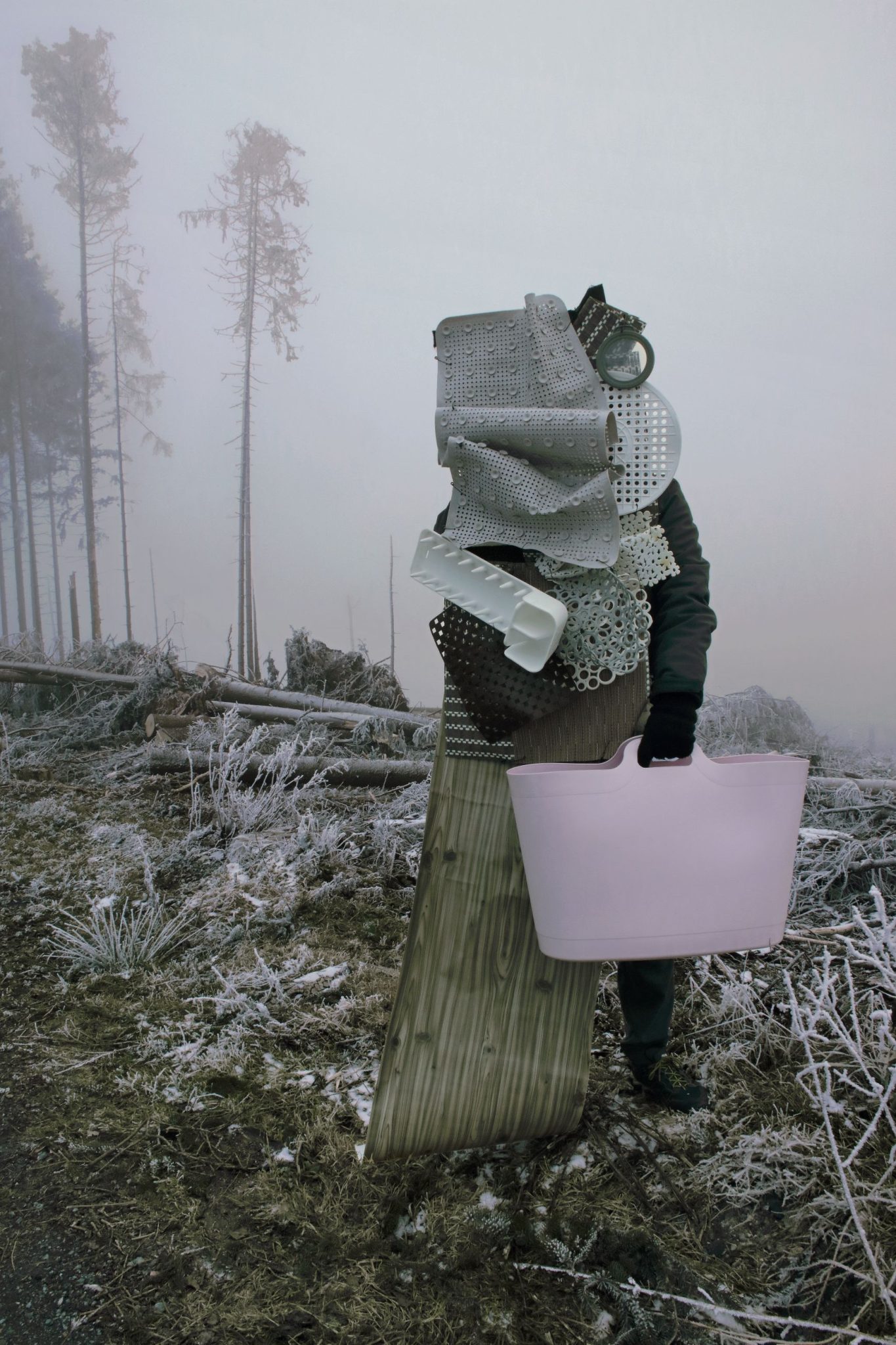
Gestural drawings, ink drawings, paintings, photographs, and installations present various ways of viewing the world and different possibilities of perception. The exhibition *Resonance* also builds on the concept of “natura” in relation to humanity’s connection to nature. I am pleased that this concept gives the exhibition a broader social dimension in addition to its personal and aesthetic aspects.
MZ: Thank you for the interview.
GF: It was my pleasure.