SHADING IN THE SPUR
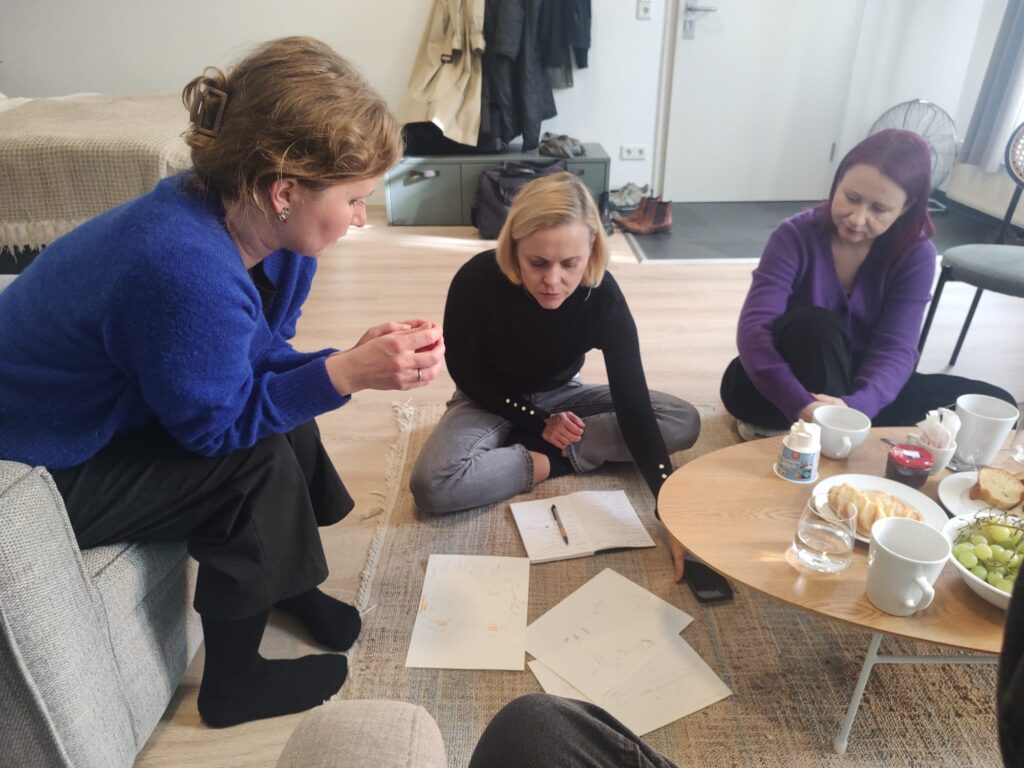
When you say “shading”, many people may think of dark silhouettes or a laborious drawing technique. In our case, however, it was about something much more joyful: a few intensive days in Dresden. We went there thanks to the European programme Erasmus+ and we “shadowed” at one of our partner organisations in OSTRALE – Zentrum für zeitgenössische Kunst.
Our Erasmus+ trip to Dresden started with a travel day. Classic: suitcases, bus, a bit of nervousness and high expectations. The day after, however, all fears were put aside. Our mentor, curator and project manager Veronika Krülle Kotoučová welcomed us at the Robotron Kantine, where OSTRALE is based. She opened the door not only to their organization, but also to the behind the scenes of the International Biennial of Contemporary Art, which ended here a few days ago.

We were lucky – in the Robotron Kantine the exhibition OSTRALE – Biennale für zeitgenössische Kunst was being deinstalled. What the average visitor will never see, we had right in front of our eyes: packing the works, checking their condition, documentation, transport planning, communication with artists and technicians. We found out how the logistics of an exhibition are organised so that each work travels safely around the world and returns safely. These experiences were not only “interesting” for us, but also very practical – next year we will exhibit selected works from the Biennial in Litomyšl as part of the upcoming Out of Ostrale exhibition.
ADULT EDUCATION
A large part of our stay in Dresden was dedicated to adult education and community work. We learned that at OSTRALE, education is not just an adjunct to exhibitions, but an organic part of the curatorial intention. Programs for schools and adult visitors are thought out over the long term and count on the relationship between the gallery and the public to be built over time – patiently, in small steps. We have been thinking about how to develop a similar approach in our city, especially towards adults and seniors, for whom we want to create an even more varied offer in the future.
One of the important topics of our trip was digital presentation and communication. OSTRALE presented its online database of artworks – a tool that facilitates the work of curators, archiving and project planning. Together we started to “analyse” the websites, social networks and visual communication of various cultural institutions. We talked about how the tone of communication and visuals influence how different groups of visitors perceive a gallery. And most importantly: how to reach those who may not have found their way to us yet – adult students, and people who have respect for art, but maybe also a little shy.

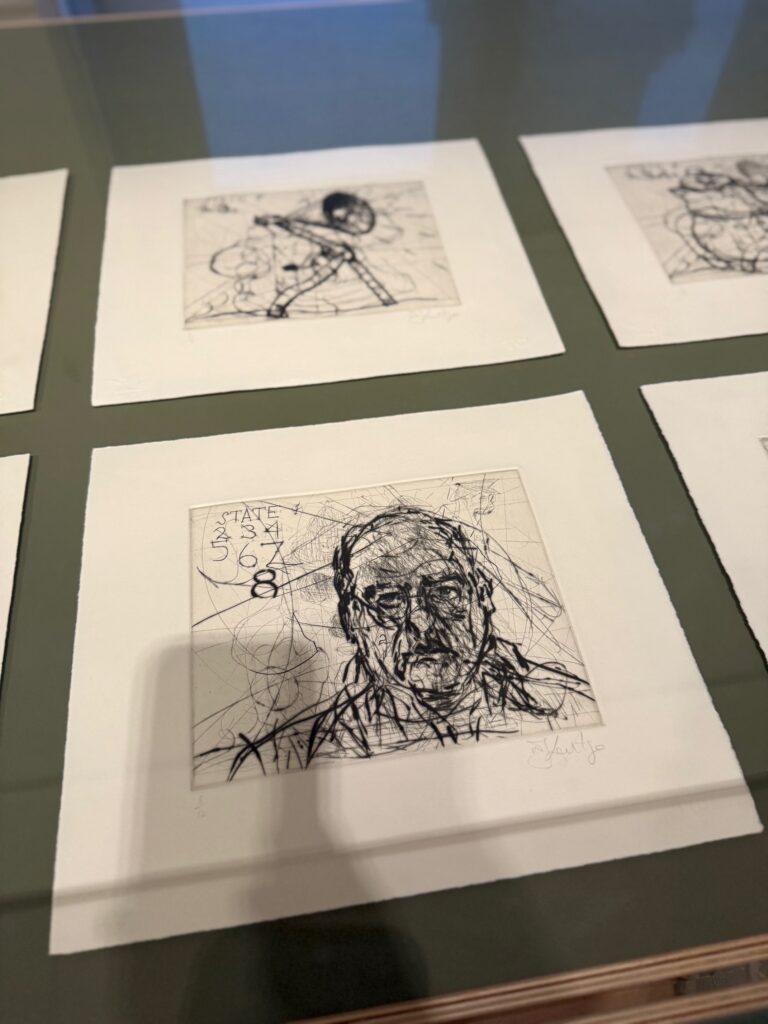
The mobility also included visits to other institutions. The William Kentridge exhibition Listen to the Echo, prepared by the State Art Collections in Dresden, allowed us to compare different curatorial approaches and ways of working with space. In the Residenz and in the Neue Grüne Gewölbe exhibition we looked at the difference between the presentation of contemporary and older art – from the technical demands of the installation to the interpretive texts for visitors. We will capitalize on these experiences in planning our own permanent exhibitions and short-term exhibitions, including accompanying programs.
JOINT PROJECTS – OUT OF OSTRALE
The end of the mobility was dedicated to long-term cooperation. Together with the OSTRALE team, we looked for concrete ways to continue: from reciprocal visits and sharing of methodologies, to curatorial mobility, to collaboration on the future Biennale planned for 2027. The mobility in Dresden did not end with our return home – rather, it became the beginning of a new chapter.
Our trip to Dresden would not have been possible without the support of Erasmus+ and the European Union. It was thanks to European funding that we were able to leave our daily routine, see a different cultural environment, compare experiences and bring home not only new ideas but also concrete partnerships. For us, the European Union was not just a logo on a poster in this project, but a real partner that enables the arts and adult education to move forward across borders.
We returned from Dresden with a head full of notes, but mostly with the conviction that art can be a powerful tool for lifelong learning – if we give it space, time and an attentive audience. And this is what we want to continue working on at the Litomyšl Municipal Gallery.